Table of Contents
- The Prostate Through the Decades
- What Causes the Prostate to Enlarge?
- Hormonal Shifts After 40
- Why BPH Symptoms Often Appear Gradually
- The Testosterone-DHT-Estrogen Triad
- How Inflammation Accelerates Prostate Enlargement
- What Is Normal vs. Concerning
- Managing Prostate Health Through Your 50s, 60s, and 70s
- Frequently Asked Questions
For most men, the prostate is an afterthought until something changes. A slightly slower stream, an extra trip to the bathroom at night, a new sense of urgency that was never there before. These shifts tend to arrive so gradually that many men dismiss them as simply getting older — which, in a biological sense, is true. But understanding why these changes happen is one of the most empowering steps a man can take for his long-term health.
Knowledge does not just reduce anxiety. It enables action. And when it comes to the aging prostate, action taken early makes a meaningful difference in quality of life across the coming decades.
The Prostate Through the Decades
The prostate goes through two distinct growth phases in a man's life. The first occurs during puberty, when testosterone drives the gland from its pea-sized initial state to roughly the size of a walnut by early adulthood. This growth phase concludes by the mid-20s, after which the prostate remains relatively stable in size — for a while.
The second growth phase begins in the mid-30s to early 40s and, unlike the first, does not stop. It continues for the rest of a man's life, driven by a complex interplay of hormones, inflammation, and cellular signaling that varies significantly between individuals.
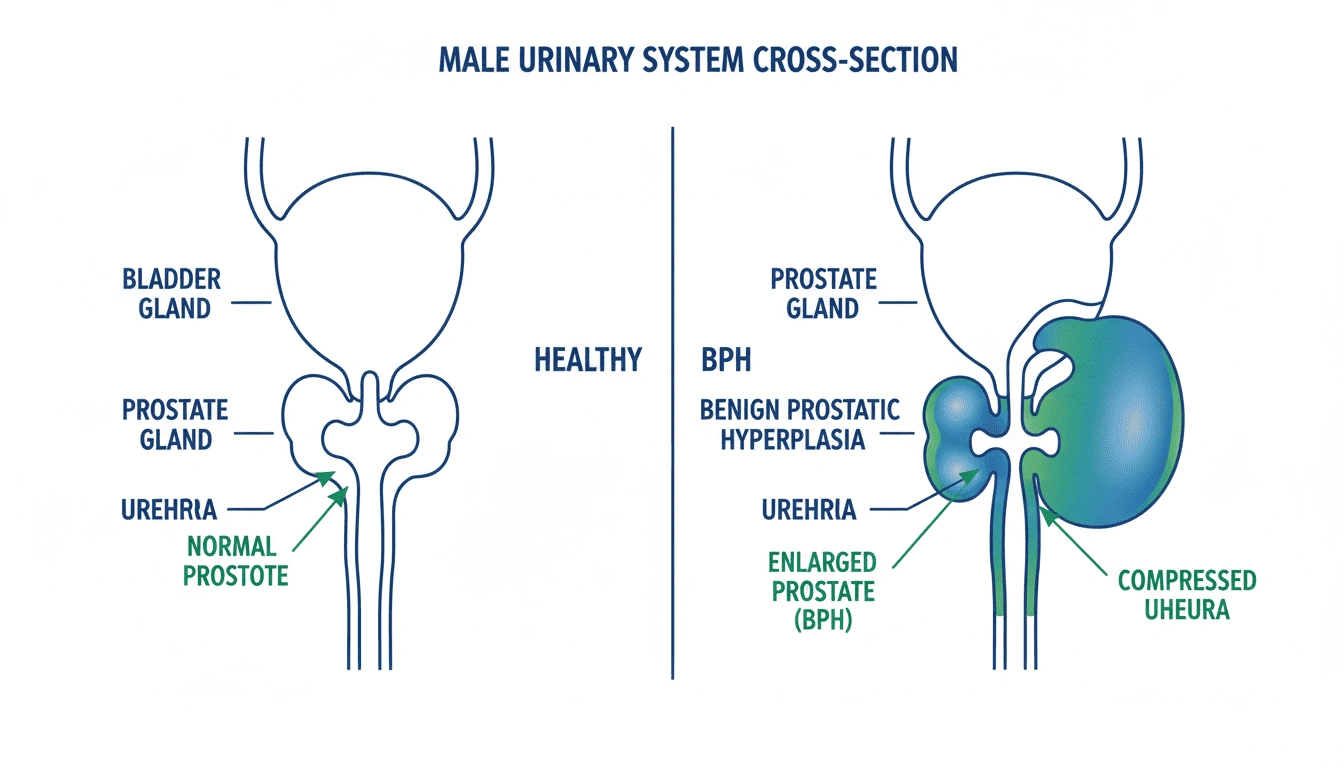
The numbers tell the story clearly. By age 40, subtle cellular changes are already underway in most men's prostates. By age 50, many men begin noticing the first urinary symptoms. By age 60, roughly half of all men have clinically measurable benign prostatic hyperplasia (BPH). By age 80, the proportion rises to approximately 90%.
These statistics are not meant to be alarming. They are meant to normalize the conversation — and to underscore that prostate changes with aging are universal, even if the degree and pace vary considerably from one man to another.
What Causes the Prostate to Enlarge?
The exact mechanism behind BPH is multifactorial, but several contributing factors are well established by decades of research:
- Hormonal changes: The conversion of testosterone into dihydrotestosterone (DHT) via the enzyme 5-alpha reductase appears to be a primary driver of prostate cell proliferation. As DHT accumulates in prostate tissue over time, it stimulates the gland to grow.
- Estrogen elevation: As testosterone levels decline with age, the relative proportion of estrogen in the male body rises. Estrogen appears to sensitize prostate tissue to DHT's growth-promoting effects, amplifying the enlargement process.
- Reduced apoptosis: Normal cellular aging processes lead to a reduced rate of programmed cell death (apoptosis) in prostate tissue. Cells that would previously have died off naturally begin to accumulate, contributing to gradual enlargement.
- Chronic inflammation: Low-grade, chronic inflammation in prostate tissue — often subclinical and undetected — appears to accelerate BPH progression by promoting cell proliferation and reducing tissue repair efficiency.
Hormonal Shifts After 40
Testosterone levels decline by approximately 1% per year after age 30. This gradual decline is often called andropause, though it is far more subtle and prolonged than female menopause. While total testosterone falls, the enzyme 5-alpha reductase continues converting available testosterone into DHT within the prostate gland itself.
The result is a paradox: even as systemic testosterone levels drop, DHT activity within the prostate can remain elevated — continuing to stimulate prostate cell growth decades after overall androgen levels have begun to fall.
At the same time, adipose tissue (body fat) — which becomes more prevalent with aging and a less active lifestyle — produces estrogen through a process called aromatization. Higher body fat means more estrogen, which means greater DHT sensitivity in prostate tissue. This is one of the key reasons why maintaining a healthy weight is so relevant to prostate health after 40.
Why BPH Symptoms Often Appear Gradually
One of the most clinically important features of BPH is the gradual, insidious onset of symptoms. The bladder is remarkably adaptive. As the prostate enlarges and begins to narrow the urethra, the bladder compensates by developing a thicker, stronger muscular wall (called the detrusor muscle) capable of generating greater force to push urine through the reduced opening.
For years — sometimes a decade or more — this compensation maintains adequate urinary function. Men may notice a slightly slower stream but assume it is normal for their age. The bladder's adaptation is so effective that many men are already well into the BPH process before symptoms become bothersome enough to mention to a doctor.
Over time, however, the overworked detrusor muscle becomes hypersensitive. It begins contracting at lower and lower bladder volumes, generating urgent signals to urinate even when the bladder is only partially filled. This overactive bladder phase is when the most disruptive symptoms appear: urgency, frequency, and nocturia.
The Testosterone-DHT-Estrogen Triad
Understanding the interplay between testosterone, DHT, and estrogen helps explain why prostate enlargement accelerates in the second half of life. Think of it as a three-factor equation:
- Testosterone provides the raw substrate that 5-alpha reductase converts into DHT.
- DHT binds to receptors in prostate cells and stimulates their growth and multiplication.
- Estrogen increases the density and sensitivity of DHT receptors in prostate tissue, amplifying DHT's effect even when DHT levels are not dramatically elevated.
Several botanical ingredients — including Saw Palmetto berry extract — are believed to work at least in part by modulating this pathway, supporting healthy DHT metabolism within the prostate without the systemic hormonal effects of pharmaceutical 5-alpha reductase inhibitors.
How Inflammation Accelerates Prostate Enlargement
Emerging research over the past two decades has significantly elevated the role of chronic inflammation as a driver of BPH. Studies show that inflammatory cells are consistently present in prostate tissue biopsies from men with BPH, and that the degree of inflammation often correlates with symptom severity.
The mechanisms are not entirely understood, but inflammation appears to promote prostate cell proliferation directly while also disrupting the normal hormonal signaling that regulates prostate size. Systemic inflammation — driven by obesity, poor diet, physical inactivity, and chronic stress — creates a tissue environment that favors prostate enlargement.
This is one of the strongest evidence-based arguments for an anti-inflammatory lifestyle: exercise, a plant-rich diet high in polyphenols and omega-3 fatty acids, stress management, and adequate sleep all reduce systemic inflammatory markers and create a less permissive environment for prostate enlargement.
What Is Normal vs. Concerning
Not every urinary change requires urgent attention, but knowing the difference between expected aging-related shifts and symptoms requiring prompt evaluation is essential.
Generally Expected with Aging
- Gradual slowing of urinary stream over many years
- Waking once per night to urinate (particularly after age 60)
- Slightly longer time needed before urination begins
- Mildly reduced urine volume per void
Symptoms Warranting Prompt Medical Attention
- Complete inability to urinate (acute urinary retention) — this is a medical emergency
- Blood visible in urine or semen (hematuria or hematospermia)
- Pain or burning sensation during urination
- Significant worsening of symptoms over a short period (days to weeks)
- Symptoms accompanied by fever, chills, or lower back/pelvic pain (possible infection)
- Unexplained weight loss combined with urinary symptoms
When in doubt, consult your healthcare provider. A simple PSA blood test, urinalysis, and physical examination can provide enormous clarity about what is happening and what, if anything, needs to be done.
Managing Prostate Health Through Your 50s, 60s, and 70s
The most effective approach to long-term prostate wellness is layered, combining several strategies simultaneously rather than relying on any single intervention:
Diet and Nutrition
A Mediterranean-style diet emphasizing vegetables (particularly cruciferous varieties and tomatoes), whole grains, legumes, fatty fish, olive oil, and berries provides the anti-inflammatory nutrients most strongly associated with prostate health. Reducing red and processed meat, refined carbohydrates, and alcohol is equally important.
Regular Physical Activity
Aerobic exercise and resistance training both reduce systemic inflammation, improve insulin sensitivity, support a healthy weight, and have been directly associated with reduced BPH symptom severity in large prospective studies. A target of 150 minutes of moderate aerobic activity and two strength sessions per week is supported by the research.
Weight Management
Maintaining a healthy body weight — particularly reducing visceral (abdominal) fat — is one of the most impactful single changes a man can make. Obesity elevates estrogen through aromatization, worsens insulin resistance, increases systemic inflammation, and accelerates BPH progression.
Targeted Botanical Supplementation
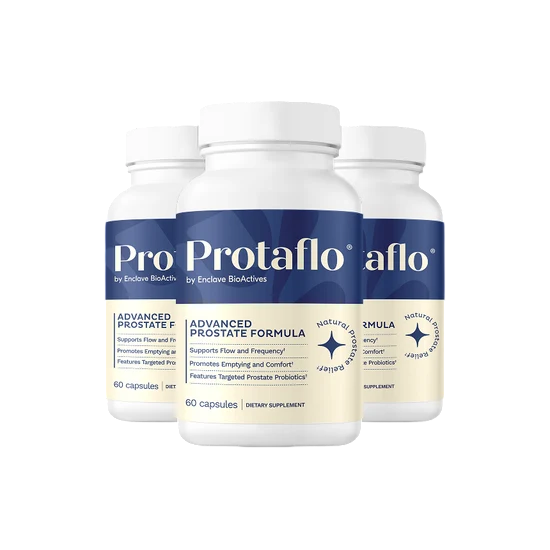
Several plant-based compounds have been studied extensively for their ability to support prostate health in aging men. Saw Palmetto berry extract, Pygeum Africanum bark, Beta-Sitosterol, Nettle Root, and targeted prostate probiotics each work through distinct but complementary mechanisms. Protaflo's advanced formula integrates all of these ingredients into a single daily supplement designed for comprehensive prostate support.
Regular Screening
Annual PSA testing and a conversation with your healthcare provider about prostate health allow for early detection and the widest range of management options. Think of screening as a prostate wellness habit in its own right — not something to defer until symptoms become disruptive.
Support Your Prostate Through Every Decade with Protaflo®
Saw Palmetto, Pygeum Africanum, Beta-Sitosterol, Nettle Root, and a targeted probiotic blend — all in one convenient daily formula designed for the aging male prostate.
Claim Your Discount — Limited Time*These statements have not been evaluated by the FDA. Not intended to diagnose, treat, cure, or prevent any disease.
Frequently Asked Questions
Related Articles

7 Common Signs of an Enlarged Prostate Every Man Should Know