Table of Contents
- Why Prostate Health Myths Are Dangerous
- Myth #1: Only Elderly Men Get Prostate Problems
- Myth #2: No Symptoms Means No Problem
- Myth #3: Prostate Issues Always Mean Cancer
- Myth #4: Sexual Activity Damages the Prostate
- Myth #5: PSA Tests Give a Definitive Answer
- Myth #6: Diet Has No Effect on Prostate Health
- Myth #7: Prostate Problems Are Inevitable and Unpreventable
- Myth #8: Prostate Supplements Are Just Placebos
- Frequently Asked Questions
When it comes to prostate health, misinformation travels fast — through locker rooms, family gatherings, online forums, and even from well-meaning friends who believe they know the facts. These myths delay men from seeking timely care, discourage healthy habits, create unnecessary anxiety, and in some cases lead to real harm through neglect or misplaced fear.
The evidence is clear: men who understand their prostate health accurately take more proactive steps, make better lifestyle decisions, and achieve better long-term outcomes. In this article, we dismantle eight of the most persistent and damaging myths — and replace them with what the research actually shows.
Why Prostate Health Myths Are Dangerous
Myths about prostate health don’t just spread false information — they actively shape behavior in harmful ways. A man who believes prostate problems are exclusively an old man’s concern will not take preventive action in his 40s and 50s, when intervention has the greatest long-term impact. A man who believes his lack of symptoms means his prostate is fine will defer medical conversations for years, allowing slow-developing conditions to progress unchecked.
Across all eight myths below, you’ll notice the same outcome: passivity. Every myth on this list, if believed, encourages men to do less, wait longer, and engage less proactively with their health. The antidote is accurate, accessible information — which is exactly what follows.
Myth #1: “Prostate Problems Only Affect Elderly Men”
The Myth
Prostate health is something men in their 70s and 80s need to think about — not younger men. If you’re in your 40s or 50s, you have decades before this becomes relevant.
The Reality
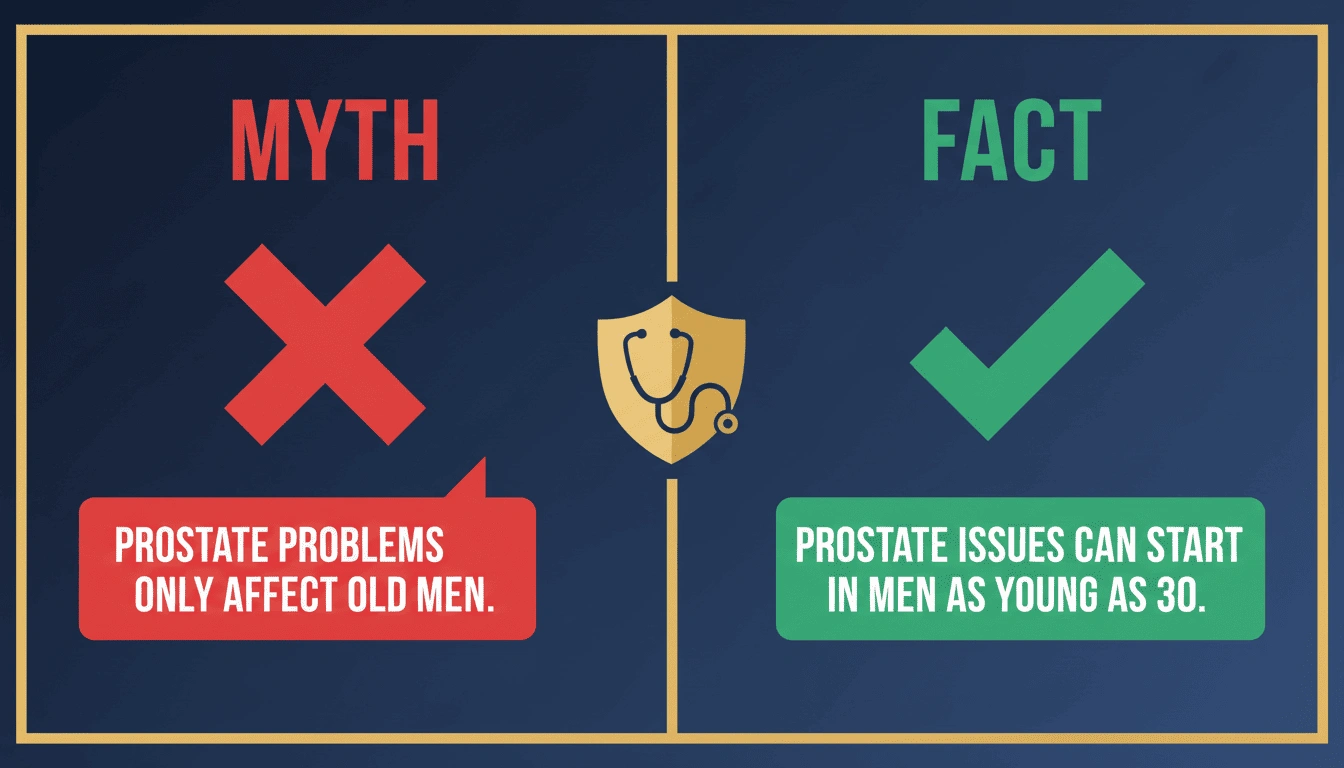
This myth is one of the most consequential because it delays preventive action precisely when it matters most. While the risk of benign prostatic hyperplasia (BPH) does increase with age, histological evidence — meaning microscopic changes in prostate tissue — has been found in men as young as their late 30s and early 40s. Prostatitis, an inflammation of the prostate gland, is in fact most commonly diagnosed in men between the ages of 30 and 50, not elderly men.
Additionally, the lifestyle factors that most strongly influence long-term prostate health — diet, physical activity, weight management, alcohol consumption, and chronic inflammation — accumulate their effects over decades. A man who begins paying attention to these factors at 40 has a meaningfully different prostate health trajectory than a man who waits until 65 to consider the subject.
Understanding prostate health is not an old man’s task. It is a middle-aged man’s opportunity.
Myth #2: “No Symptoms Means No Problem”
The Myth
If you’re not experiencing any noticeable urinary difficulties or discomfort, your prostate must be fine. Symptoms are your body’s early warning system, and if it isn’t alerting you, nothing is wrong.
The Reality
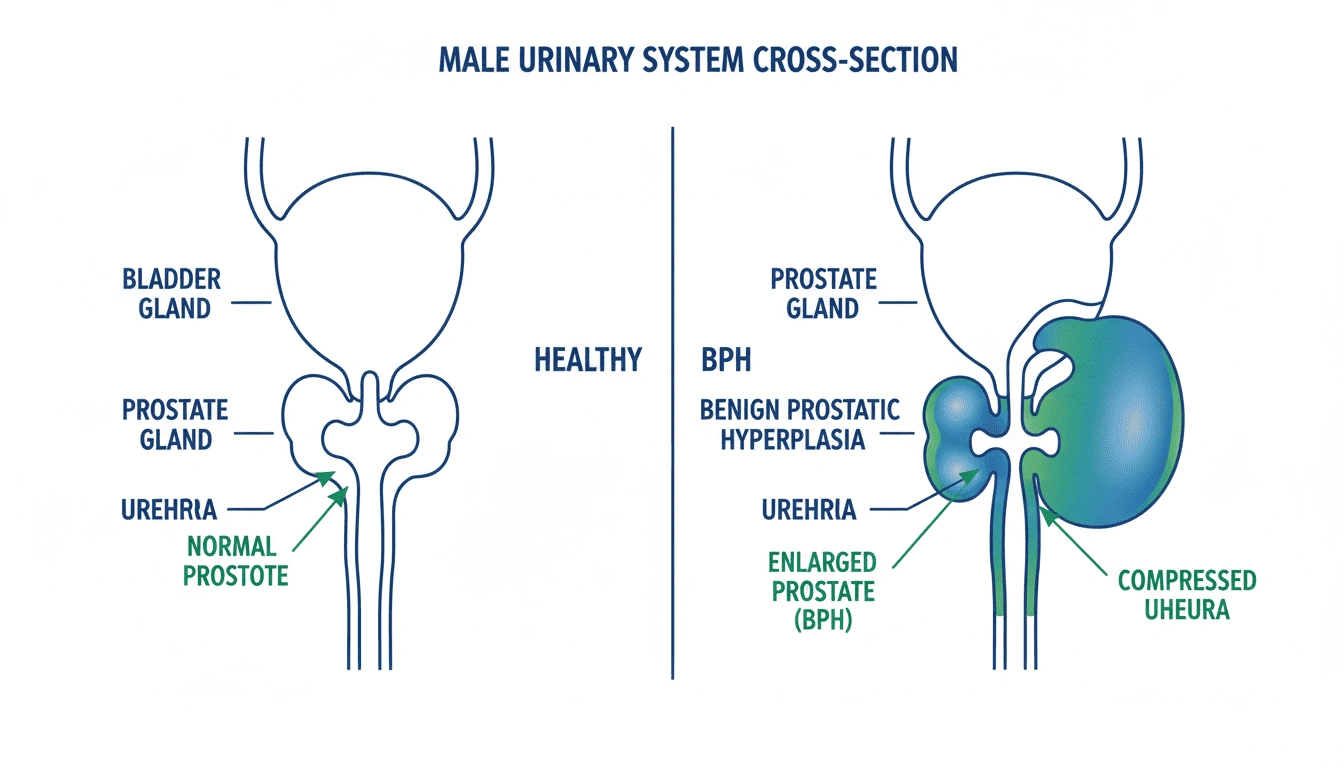
BPH is a characteristically silent condition in its early stages. The prostate can grow significantly — doubling or even tripling in volume — before the urethral compression it causes becomes symptomatic enough to disrupt daily life. Many men endure a gradually weakening urinary stream for years before connecting it to prostate enlargement, having normalized the change so slowly it never registered as a symptom worth mentioning.
Furthermore, the absence of urinary symptoms does not exclude other prostate concerns. Elevated PSA levels, early inflammatory changes, and early-stage prostate cancer frequently produce no symptoms at all in their early phases. Waiting for your body to announce a problem is a strategy that consistently produces later-stage diagnoses and more complex management.
Regular conversations with your physician about prostate health — especially after age 45 — are far more reliable than waiting for symptoms to appear.
Myth #3: “Prostate Issues Always Mean Cancer”
The Myth
Any problem with the prostate — enlargement, urinary symptoms, or an elevated PSA — signals cancer. Many men avoid discussing prostate symptoms with their doctor precisely because they fear what they might find out.
The Reality
This is perhaps the most emotionally charged myth, and the most counterproductive. The fear of a cancer diagnosis keeps men from having conversations that could catch genuine problems early — and it causes entirely unnecessary anxiety in the far more common cases where the underlying issue is benign.
There are three major prostate conditions, and they are completely distinct from one another:
- BPH (Benign Prostatic Hyperplasia): A noncancerous enlargement of the prostate. “Benign” means it is not cancer and does not become cancer. Having BPH does not increase your risk of prostate cancer.
- Prostatitis: Inflammation or infection of the prostate, most commonly affecting men under 50. It is not cancer and is not a precursor to cancer.
- Prostate Cancer: A separate condition entirely, with different causes, risk factors, diagnostic criteria, and treatment approaches.
The overwhelming majority of men with prostate symptoms have BPH or prostatitis — not cancer. Treating these three conditions as interchangeable is both medically inaccurate and psychologically harmful.
Myth #4: “Sexual Activity Damages the Prostate”
The Myth
Frequent sexual activity or ejaculation places strain on the prostate and contributes to long-term enlargement, inflammation, or damage. Some versions of this myth claim celibacy or reduced sexual activity protects prostate health.
The Reality
The research points in the opposite direction. A well-known prospective study published in the Journal of the American Medical Association followed nearly 30,000 men over eight years and found that men who ejaculated more frequently — 21 or more times per month — had a significantly lower risk of prostate cancer compared to men who ejaculated less frequently. The proposed mechanism is that regular ejaculation helps flush potentially harmful substances from the prostate ducts, reducing the opportunity for carcinogens or inflammatory compounds to accumulate.
Sexual activity is a normal, healthy aspect of adult male physiology. It does not cause BPH, prostatitis, or prostate cancer. If a man is experiencing pain during or after ejaculation, that is a symptom worth discussing with a physician — but its cause is not the sexual activity itself.
Myth #5: “PSA Tests Give a Definitive Answer”
The Myth
A normal PSA test result means your prostate is perfectly healthy. An elevated PSA result means you have prostate cancer. The test provides binary, reliable clarity.
The Reality
PSA (prostate-specific antigen) testing is a useful and widely used screening tool, but it is neither perfectly sensitive nor perfectly specific. PSA is produced by prostate cells generally — not exclusively by cancer cells — so levels can be elevated by entirely benign causes:
- BPH (enlarged prostate produces more PSA)
- Prostatitis or urinary tract infection
- Recent vigorous physical exercise
- Recent sexual activity or ejaculation
- Certain medications, including some cholesterol-lowering drugs
- Urological procedures such as cystoscopy
Conversely, a minority of men with prostate cancer have PSA levels within the “normal” range, meaning a normal PSA does not completely exclude cancer. PSA results must always be interpreted in the context of your full medical history, physical examination findings, age, and family history — never in isolation. Your physician is your partner in interpreting what PSA results mean for you specifically.
Myth #6: “Diet Has No Effect on Prostate Health”
The Myth
The prostate grows because of hormones and aging — two things you can’t control. What you eat is irrelevant to what happens with your prostate over time.
The Reality
Population studies comparing prostate health outcomes across countries with dramatically different dietary patterns tell a compelling story. Rates of symptomatic BPH and prostate cancer are significantly lower in cultures whose traditional diets are rich in vegetables, legumes, fish, and lycopene-rich foods, compared with Western diets heavy in red meat, processed foods, refined carbohydrates, and saturated fats.
Several specific nutrients have been linked to prostate health in clinical research:
- Lycopene (abundant in cooked tomatoes): Consistently associated with lower prostate cancer risk and reduced PSA levels in prospective studies.
- Zinc (pumpkin seeds, oysters, beef): The prostate contains the highest concentration of zinc of any organ in the human body, and zinc levels are consistently lower in prostate tissue affected by BPH or cancer.
- Omega-3 fatty acids (salmon, mackerel, sardines): Reduce systemic and prostate-specific inflammation, a key driver of BPH progression.
- EGCG from green tea: Multiple in vitro and clinical studies show anti-proliferative effects on prostate cells.
- Cruciferous vegetables (broccoli, cauliflower, Brussels sprouts): Rich in sulforaphane and indole-3-carbinol, compounds that support healthy estrogen metabolism relevant to prostate tissue.
Diet is one of the most powerful levers a man has for influencing his prostate health trajectory — and unlike genetics or age, it is entirely within his control.
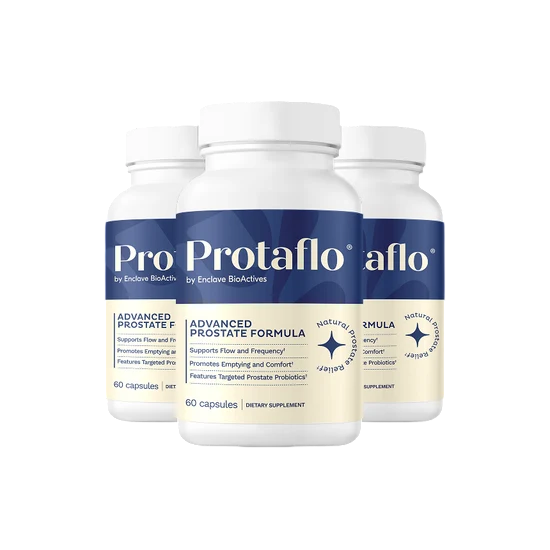
Protaflo® — Prostate Support Built on Real Research
Formulated with Saw Palmetto, Lycopene, Zinc, Beta-Sitosterol, Pygeum, and more — the ingredients most studied for urinary comfort and prostate wellness, in one daily formula.
Claim Your Discount Today*These statements have not been evaluated by the FDA. Not intended to diagnose, treat, cure, or prevent any disease.
Myth #7: “Prostate Problems Are Inevitable and Unpreventable”
The Myth
The prostate grows as men age — that’s just biology. There is nothing a man can do to meaningfully alter that trajectory, so worrying about prevention is pointless.
The Reality
While it is true that prostate growth is a near-universal feature of male aging, the degree of that growth, the speed of progression, and the severity of resulting symptoms vary enormously between men — and those differences are substantially driven by modifiable factors.
Men with higher BMI, sedentary lifestyles, poor dietary patterns, and elevated markers of systemic inflammation consistently show faster BPH progression and more severe urinary symptoms than active, healthy-weight men eating anti-inflammatory diets. A landmark Harvard Health Professionals Follow-Up Study found that brisk walking for three or more hours per week was associated with a 25% lower risk of BPH-related urinary symptoms compared to sedentary men.
The strategies with the strongest evidence base for prostate health preservation include:
- Regular aerobic exercise (150 minutes or more per week)
- Achieving and maintaining a healthy body weight
- A Mediterranean-style or plant-forward dietary pattern
- Limiting alcohol, particularly beer, which raises prolactin levels and may stimulate prostate growth
- Managing chronic stress, which elevates cortisol and downstream inflammatory markers
- Targeted nutritional supplementation with clinically supported ingredients
Prostate enlargement may be common, but significant urinary dysfunction is not inevitable for men who live proactively.
Myth #8: “Prostate Supplements Are Just Placebos”
The Myth
The supplement industry is full of exaggerated claims and ineffective products. Prostate supplements in particular are snake oil — expensive placebos with no real mechanism of action or clinical evidence behind them.
The Reality
The blanket dismissal of all prostate supplements ignores a substantial body of peer-reviewed clinical research on specific, well-characterized botanical and nutritional ingredients. The critical distinction is between evidence-supported ingredients used at clinically relevant doses, and proprietary blends that combine many ingredients at sub-therapeutic amounts to create an impressive-looking label.
The following ingredients have published clinical trial data supporting their role in prostate and urinary health:
- Saw Palmetto Berry Extract (standardized to 85–95% fatty acids): Multiple systematic reviews and randomized controlled trials demonstrate modest but consistent improvements in urinary flow rate and frequency. Believed to work by modulating DHT binding in prostate tissue.
- Beta-Sitosterol: A plant sterol with multiple randomized controlled trials showing statistically significant improvements in International Prostate Symptom Scores and peak urinary flow rates compared to placebo.
- Pygeum Africanum Bark Extract: A Cochrane-reviewed intervention with evidence supporting improved bladder emptying, reduced nocturia, and enhanced urinary comfort in men with BPH.
- Zinc: Essential for healthy prostate function. Prostate tissue actively concentrates zinc, and deficiency is associated with increased prostate cell proliferation.
- Lycopene: Epidemiological and clinical evidence consistently links higher lycopene intake with lower PSA levels and reduced risk of prostate-related events.
- Pumpkin Seed Extract: Contains phytosterols and delta-7-sterine that appear to inhibit prostate cell proliferation and support urinary comfort.
The question is not whether prostate supplements can work — the research shows certain ingredients genuinely can. The question is whether the specific product you are considering contains the right ingredients at effective doses, in bioavailable forms. That’s a very different standard than blanket skepticism.
Frequently Asked Questions
Related Articles

7 Common Signs of an Enlarged Prostate